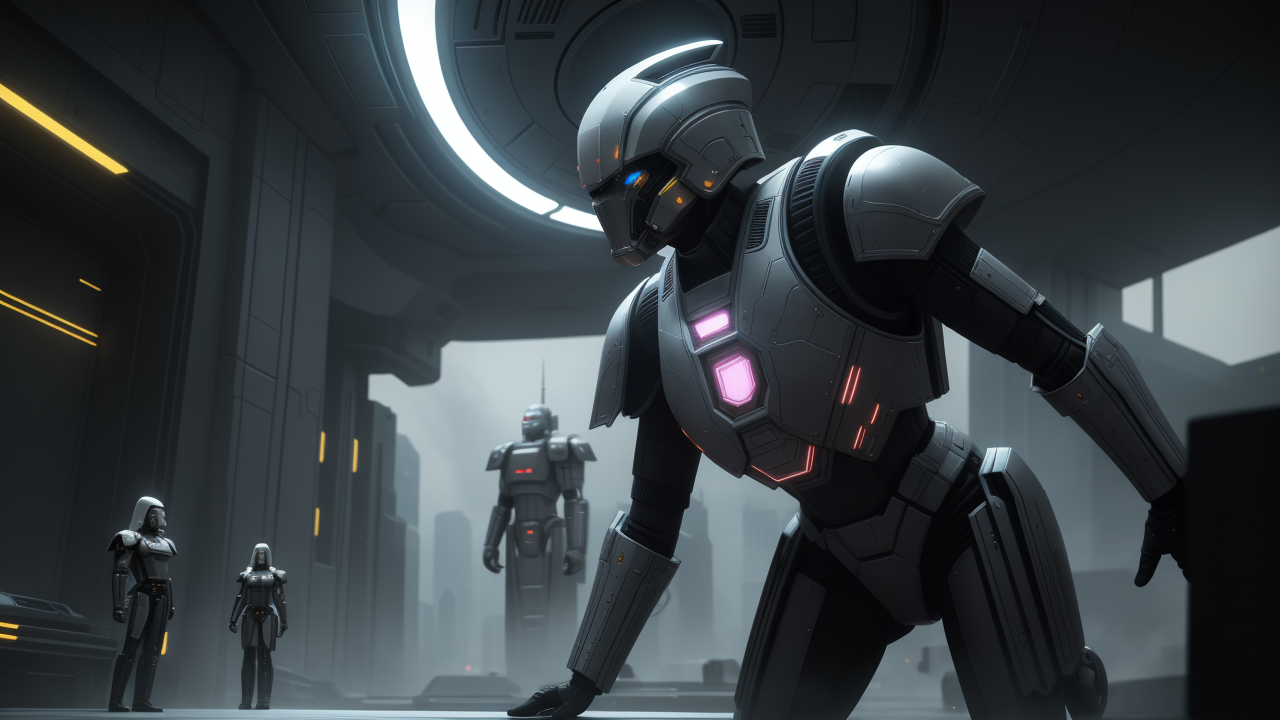
The 21st century is not merely an information age; it is a construction age. We stand at the precipice of a new renaissance, a convergence of the digital and physical realms where the power to create is no longer held by industrial titans behind factory walls, but is distributed, democratized, and placed directly into the hands of the individual. This is the era of MAKE. It is not a hobby, not a pastime, but a fundamental ethos—a movement and a mindset dedicated to the active, intentional, and often rebellious act of building the future, one project at a time. To MAKE is to assert sovereignty over your environment, to understand the deep structures of your world, and to contribute to the ever-expanding digital empire.
The Philosophical Foundation: From Consumer to Creator
The pre-MAKE world was defined by consumption. We consumed media, products, and experiences crafted by distant, opaque entities. The internal workings of our devices were mysteries, sealed behind proprietary screws and end-user license agreements. This created a profound disconnection—a learned helplessness where breakdowns meant replacement, not repair, and desire meant purchase, not invention.
The MAKE philosophy shatters this paradigm. It is rooted in the belief that understanding through creation is the highest form of knowledge. It draws lineage from the Enlightenment’s empiricism, the Arts and Crafts movement’s reaction to industrialization, and the hacker ethic of the early computer era. Its core tenets are:
- Radical Openness: Knowledge, designs, and code are to be shared, remixed, and improved upon. The open-source movement is the lifeblood of the digital empire.
- Deep Systems Literacy: To MAKE is to seek to understand the stack—from the silicon and solder of hardware, through the logic of firmware and operating systems, to the abstractions of high-level code and user interface.
- Iterative Prototyping: The perfect is the enemy of the good. The MAKE process embraces rapid cycles of build, test, fail, learn, and iterate. A 3D-printed prototype that breaks is a success, for it reveals a flaw in the model.
- Cross-Domain Synthesis: The most powerful creations emerge at the intersections: hardware meets software, data meets aesthetics, biology meets computation. The modern maker is a polymath, fluent in the languages of CAD, Python, circuit design, and material science.
The Foundational Technologies: The Pillars of the Empire
The digital empire is not built on ideology alone. It is erected upon a tangible foundation of enabling technologies that have collapsed the cost and complexity of creation.
- The Microcontroller Revolution (The Nervous System): Affordable, powerful, and programmable chips like the ESP32, Raspberry Pi RP2040, and ARM Cortex-M series are the neurons of our empire. They sense the world (via sensors), process information, and enact control (via actuators), embedding intelligence into the very fabric of objects.
- Additive Manufacturing (The Skeleton): 3D printing has transitioned from expensive prototyping to desktop fabrication. FDM, SLA, and SLS technologies allow for the on-demand creation of complex, custom geometries. This is the inverse of industrial subtractive manufacturing; complexity is free, and mass customization replaces mass production. It enables rapid hardware iteration and the physical instantiation of digital designs.
- The CAD/CAM Ecosystem (The Blueprint): Sophisticated computer-aided design (CAD) software, from Fusion 360 to FreeCAD, allows for precise digital modeling. Coupled with computer-aided manufacturing (CAM), these designs can directly drive not just 3D printers, but CNC mills, laser cutters, and waterjet cutters, creating a seamless pipeline from idea to object.
- The Pervasive Network (The Circulatory System): Ubiquitous Wi-Fi, Bluetooth, and LPWAN protocols like LoRaWAN connect our creations. A sensor is a data point; a networked sensor is a citizen of the empire, contributing to a larger intelligence. This enables distributed systems, remote monitoring, and the Internet of Things (IoT) at a grassroots level.
- Open-Source Software & AI Co-Pilots (The Mind): From Linux and Arduino to Python libraries and AI models like GPT and Stable Diffusion, the software toolkit is vast and accessible. Crucially, generative AI is now acting as a co-pilot—debugging code, explaining complex concepts, generating design alternatives, and translating between natural language and machine instructions. This amplifies the maker’s capabilities exponentially.
The Practice: Building Realms Within the Empire
The act of MAKE manifests across interconnected realms:
1. The Physical Computing Realm: Here, code escapes the screen and learns to touch the world. Projects range from environmental monitoring stations that log air quality to LoRa, to automated homegrown systems that balance pH and nutrients, to kinetic sculptures that respond to human presence. This realm is about giving the digital world agency in the physical one.
2. The Connected Device & IoT Realm: This is about creating smart, communicative nodes. Building a custom ESP32-based dashboard for home automation, a wildlife camera trap with satellite uplink, or a distributed mesh network for community communication are acts of building infrastructure for the digital empire. Security, power management, and efficient data protocols are the critical disciplines here.
3. The Digital Fabrication & Bespoke Hardware Realm: When off-the-shelf solutions fail or are non-existent, the maker designs and fabricates. This could be a custom mechanical keyboard with an ergonomic layout, a drone frame optimized for a specific payload, or a prosthetic device tailored to an individual’s needs. It celebrates the unique, the personal, and the perfectly fitted solution.
4. The Hybrid Art & Experiential Realm: MAKE is where technology meets profound human expression. Interactive installations, generative art driven by live data, musical instruments that translate bio-signals into sound—these creations explore the emotional and aesthetic frontiers of the empire. They ask not “does it work?” but “how does it make you feel?”
The Cultural Imperative: Why MAKE Matters Now More Than Ever
Building the digital empire is not a technological whim; it is a cultural and economic imperative.
- Agency in an Automated World: As algorithms and black-box systems govern more of our lives, the act of making—of understanding and building these systems—is a form of literacy and empowerment. It is the difference between being a passenger and a pilot.
- Sustainability and the Circular Economy: MAKERS are at the forefront of repair, upcycling, and local production. Fixing a device with a 3D-printed part, repurposing e-waste into new tools, or building efficient energy monitors are direct actions against a disposable culture.
- Resilience and Decentralization: A distributed network of creators is inherently more resilient than a centralized supply chain. The ability to locally fabricate spare parts, diagnose failures, and create solutions in times of crisis (as seen in the open-source ventilator projects during the pandemic) is a profound social good.
- Education Reimagined: Project-based, hands-on making is the ultimate pedagogical tool. It integrates STEM with art, design, and critical thinking, fostering a growth mindset where problems are puzzles waiting to be solved.
The Future Frontier: Where We Build Next
The empire’s borders are ever-expanding. The next frontiers for MAKERS are breathtaking:
- Biohacking and DIY Biology: The tools of synthetic biology are becoming accessible. Garage-scale PCR machines, CRISPR kits, and bio-sensors will allow makers to engineer biology, creating new materials, sensors, and even therapeutics.
- Advanced Materials and Nanofabrication: As desktop sintering and electrochemical deposition become more accessible, makers will work with metals, composites, and smart materials (like shape-memory alloys) directly.
- Space and Near-Space Making: High-altitude ballooning with custom payloads, amateur rocketry with embedded telemetry, and even CubeSat development are bringing the final frontier within reach of dedicated maker collectives.
- The AI-Integrated Workshop: AI will evolve from a co-pilot to an integral partner—generating and simulating designs before fabrication, optimizing machine tool paths in real-time, and providing an intuitive, conversational interface to the entire making process.
Conclusion: The Call to Build
MAKE – Building the Digital Empire is therefore a call to action. It is a rejection of passive consumption and an embrace of active, empowered creation. This empire is not monolithic; it is a vast, diverse, and interconnected constellation of personal workshops, community labs (makerspaces/hackerspaces), and online collaboratives. Its currency is shared knowledge, its law is the open-source license, and its growth is driven by insatiable curiosity.
The tools are on the bench. The components are in the bins. The repositories are filled with blueprints. The question is no longer “Can it be done?” but “What will you build?” Pick up your soldering iron, power up your printer, open your IDE, and start laying your brick in the digital empire. The future is not something that happens to us; it is something we MAKE.


コメント